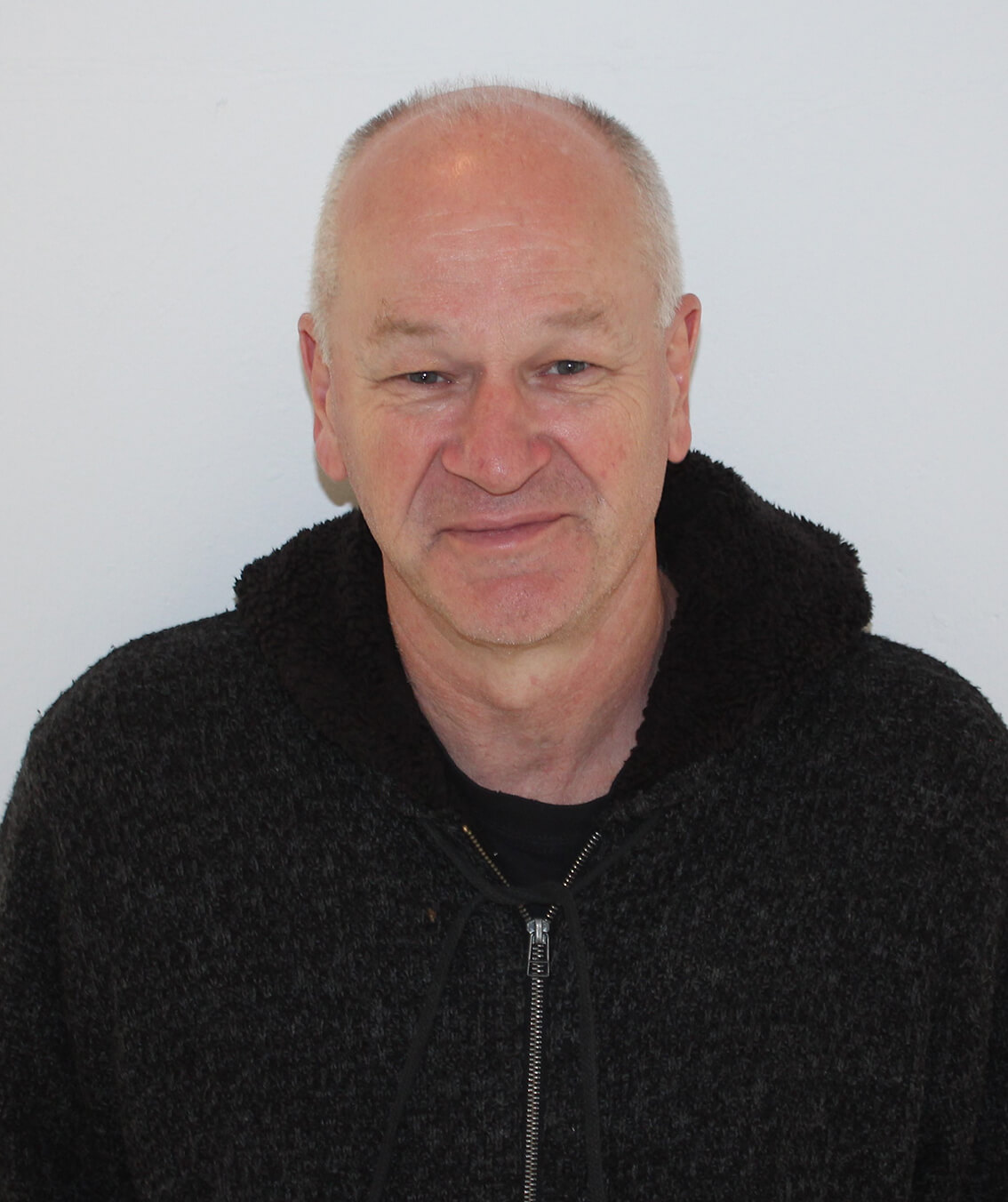
Russell Davies
Director
Director's Report
2022 was a year of ongoing transition and preparation for growth for REAP. Covid 19 restrictions had largely fallen away but its longer term impact remained, with blended modes of student support (ie. part virtual and part face to face), many staff working remotely and some donors still struggling to recover financially. 2022 was also a year of building upon new strategic directions agreed upon in 2020, and reported on in our previous annual reports. Most notable was the ongoing reshaping of our service offering and core client groups, from entirely university students to a more even balance between university students, TVET students and learners. In particular there was rapid growth and development of our Post-School Readiness Programme (PSRP). We secured new long term funding from separate donors for two PSRP projects in Northern Cape and Limpopo.
Other key developments were:
The development and adoption of a new strategic framework (see next section), featuring the further refinement of our Catchment Area Youth Development Programme model – working in greater depth in specific communities, starting at school level and moving into PSET and work placed learning (WPL). This will be our main template for future growth and development.
- The maturing of our TVET student support programme, both extending the range of students from NATED (ie. post matric vocational skills training) to National Vocational Certificate (ie. an alternative to senior schooling) to Work Placed Learning (post completion of NATED theoretical subjects). REAP has developed a WPL curriculum and support model, which includes paying stipends to employers to incentivise them to place students. REAP acted as a host employer for two WPL students in Bloemfontein.
- Finalisation of the major research project led by Penny Morrell, in collaboration with the National Bursary Support Providers Forum (NBSPF) – and launched at their biannual ‘Supporting Student Success” conference in Johannesburg. See feature article on this.
REAP supported 300 students in 2022, of whom 202 were University and University of Technology students and 98 were Technical and Vocational Education and Training (TVET) students.
I am delighted to report that 79 university students (39% of our University and University of Technology cohort) graduated in 2022. Of the 202 University and University of Technology students:
University students (62%) passed all their courses at the end of the year.
University students (11%) passed a majority of subjects including their major, enabling them to proceed to the next level.
University student (1%) were completing In-Service Training and did not write exams.
University students (2%) withdrew from the REAP Programme to continue their studies with other bursary providers, often linked to their particular discipline and with potential employment opportunities.
(19%) Students failed.
Students (5%) withdrew from the REAP Programme before writing final exams.

Learners at Ratang Thuto High School participating in the Post School Readiness Programme

Director Russell Davies speaking at National Team Week
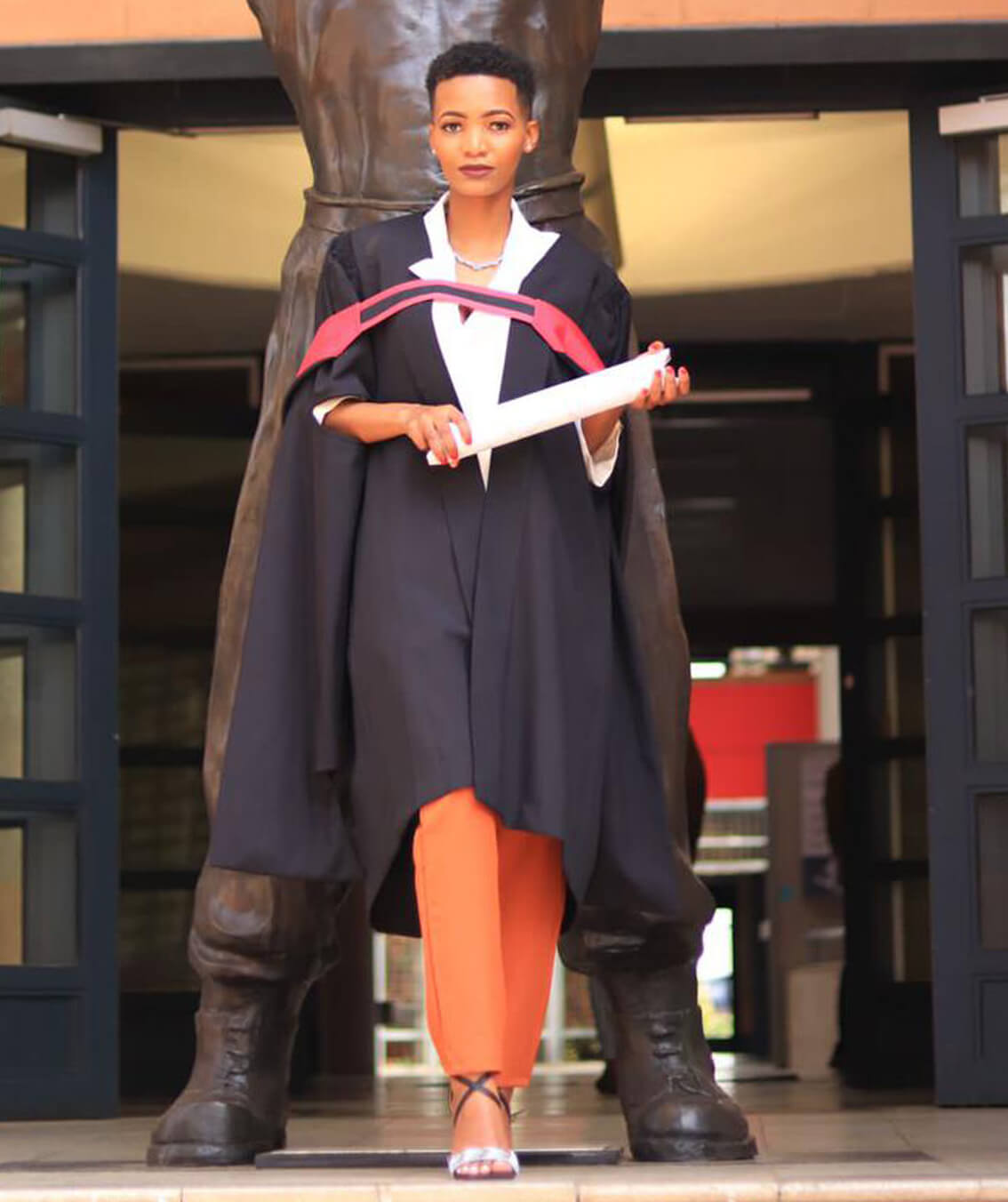
Meet Graduate
Jessey Morare
Jessey was studying BSc in Mining Engineering at the University of the Witwatersrand, in Johannesburg and she was funded by Lafarge.
She was also part of the student cohort that REAP funded through the National Skills Fund at the University of the Witwatersrand. She was behind with her academics and she used her grace period to complete her final year of study. She used her grace period fruitfully and she attended all the REAP workshops that helped her in developing the skills that she needs for the world of work. She was registered for a practical module that required her to do practical’s in a mine, she secured the practical training with Impala Platinum Mine. She exhibited positive great attributes while she was doing her internship program and she applied for a permanent role within Impala Platinum Mine. She has been considered for the permanent role and she is currently attending interviews for the role. REAP and her Student Development Advisor would like to wish her well for the role that she is being interviewed for.

REAP SDA Xoliswa Phaku at the Free State final year gala lunch with Mncube Sfiso Wandile, who graduated with a Degree in Computer Sciences from UFS

Meet Graduate
Noxolo Dlamini
Noxolo was studying for a Bachelor of Nursing at the University of Johannesburg. She is one of the NSFAS funded students that was supported by REAP in 2019. She was funded by Tania Ruth Leon Studiefonds.
She is passionate about her field of study even though she felt that it was one of the less paying field in the health sciences. She was a dedicated student throughout her academic years and with the support of the student development advisor she was able to learn more about the pay scales in her field of study. She specialised with neonatal because of her passion in working with new-born babies. She completed her studies in record time, attaining five distinctions and an average of 80% in the first semester and 67% average in the second semester. She is currently working at Dannhauser Community Health Centre as a community service Professional nurse, currently placed in labour ward.

TVET SDA Sithembiso Khumalo with some of his students from Motheo TVET college
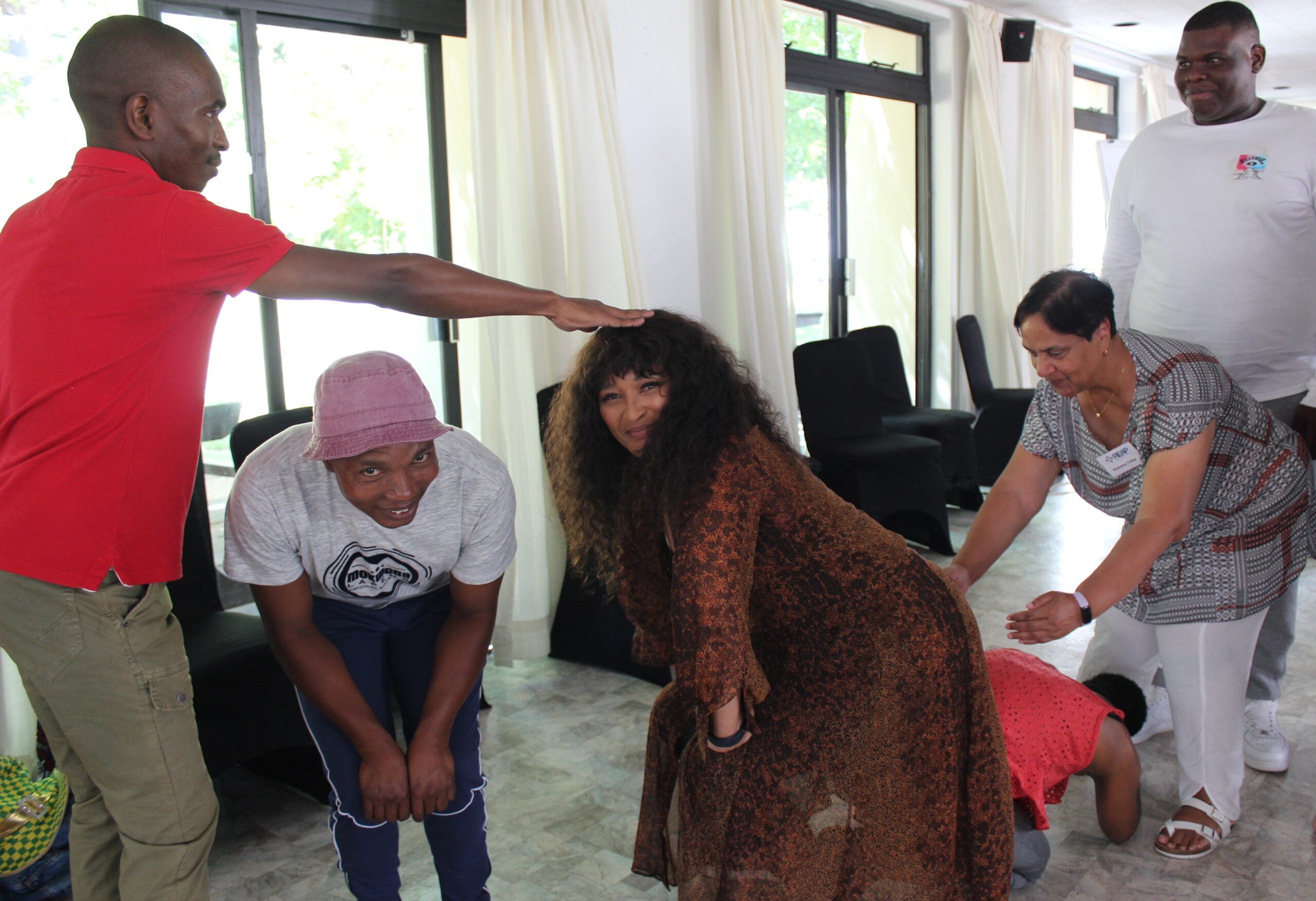
REAP staff in a team building activity
Our TVET students performed relatively well, although we know that nationally, completion rates for TVET students have been very poor for a number of years.
I am pleased to report that in 2022, of the 98 Technical and Vocational Education and Training (TVET) students:
TVET students (40%) passed all their courses at the end of the year.
TVET students (6%) were completing In-Service Training and did not write exams.
students (10%) withdrew from the REAP Programme before writing final exams, mainly due to poor academics.
students (44%) failed.
REAP is having to adapt to changing times and we are very much an organisation in transition. This transition phase may take at least another two years. We managed to break even in 2022 having recorded operating deficits in both 2020 and 2021 as we exit students recruited under a different funding regime, adapt our staffing and programming to the new model, and identify new donors. The economic impact of Covid-19 has also been severe on many business and both current and potential donors, and it is not an easy climate in which to raise new funds. Thankfully we do have reserves which will hopefully sustain us during this difficult period, but we are actively re-engineering our operating strategy and staffing model to minimise risk and exposure to deficits.
I would like to pay tribute to REAP staff for their flexibility, optimism, hard work and resilience during another very testing year. We now have staff based in six Provinces, many working remotely as we only have offices in Cape Town (head office) and Bloemfontein. As ever the REAP Board provided invaluable wise counsel and encouragement – and there were some major leadership changes (see separate article).
I remain confident that REAP has an important role to play moving forward, engaging much more intensively and strategically with specific rural communities, seeking to bring hope and transformation to youth who would otherwise be marginalised and left behind.
Russell Davies
DIRECTOR